Regulation D: Definition, Requirements, and More
Key Takeaways
Regulation D allows companies to raise private capital without SEC registration
Rules 504, 506(b), and 506(c) offer different fundraising options
Accredited investor eligibility affects participation and compliance requirements
Form D filings, disclosures, and anti-fraud rules remain essential
Investor verification, marketing restrictions, and state laws create compliance risks
Raising capital is one of the biggest challenges growing companies face.
For many businesses, a private offering can provide access to funding without the time and complexity of a public securities offering. One of the most commonly used frameworks for these transactions is Regulation D.
This guide explains the basics of Regulation D, the exemptions it provides, and the key considerations companies should keep in mind when conducting a private offering.
At InnReg, we help fintech companies and private issuers navigate Regulation D offerings and private fundraising compliance. Our team supports companies with offering structure, investor onboarding workflows, Form D filings, solicitation reviews, and ongoing compliance operations during capital raises.


What Is Regulation D?
Regulation D is a set of SEC rules that allows companies to raise money through private securities offerings without registering the offering with the SEC. By relying on one of its exemptions, companies can access private funding without going through the full public offering process.
These exemptions are commonly used by:
Startups
Private investment funds
Fintech companies
Other businesses looking to raise capital from private investors
Because these offerings generally involve fewer regulatory requirements than public offerings, they can often be completed more efficiently and at a lower cost.
However, Regulation D isn't a free pass from securities laws. Companies must still comply with rules governing investor eligibility, disclosures, filings, and communications. The specific requirements depend on the exemption being used and the structure of the offering.
What Regulation D Covers Under the Securities Act of 1933
The Securities Act of 1933 requires securities offerings to be registered with the SEC unless an exemption applies. For many private companies, that process can be costly and time-consuming.
Regulation D provides exemptions that allow companies to raise money through private offerings without registering the security. In exchange, companies must meet certain conditions, including rules governing:
Investor eligibility
Marketing activities
Investor disclosures
Each exemption has its own requirements, making proper offering structure an important part of the fundraising process. Companies must also comply with federal securities laws, including anti-fraud provisions.
Why Regulation D Matters for Fintech and Private Capital Raising
Fintech companies often operate in fast-moving markets where access to capital can directly affect growth, hiring, licensing, and product development. As a result, having flexible fundraising options can be a significant advantage.
Regulation D is widely used because it gives companies:
Access to private investors: Companies can raise funds from venture capital firms, angel investors, private funds, and other private market participants without entering the public markets.
A practical fundraising path for startups: Early-stage companies often need capital long before they’re ready for a public offering. Regulation D gives them a recognized framework for raising money during growth phases without having to register the securities.
More flexibility during expansion: Businesses can structure fundraising rounds around their operational goals, investor strategy, and long-term growth plans.
A common framework across private capital markets: Regulation D offerings are widely recognized by investors, legal teams, and regulators, making them a common exemption for private fundraising activity.
A useful option for innovative financial products: Fintech companies developing new financial models, digital asset products, embedded finance solutions, or hybrid investment platforms often use Regulation D while building and scaling their businesses.
Overview of Regulation D Exemptions
Regulation D includes several exemptions that companies can use depending on how they plan to raise capital and who they plan to accept as investors. The three most commonly used exemptions are Rule 504, Rule 506(b), and Rule 506(c).
1. Rule 504
Rule 504 allows eligible companies to raise up to $10 million within a 12-month period through a private securities offering. It’s often used by smaller businesses and early-stage companies looking for a simpler fundraising exemption.
Unlike some other Regulation D exemptions, Rule 504 may allow companies to accept both accredited and non-accredited investors. In certain situations, companies may also be allowed to publicly market the offering if state law requirements are met.
2. Rule 506(b)
Rule 506(b) is one of the most commonly used Regulation D exemptions for private offerings. It allows companies to raise an unlimited amount of capital from accredited investors and, in some cases, a limited number of non-accredited investors. Many startups, private funds, and fintech companies use Rule 506(b) because it provides flexibility without requiring a registered public offering.
One of the main restrictions under Rule 506(b) is that companies can’t publicly advertise or broadly market the offering. Fundraising usually takes place through existing business relationships, investor networks, or private discussions.

3. Rule 506(c)
Rule 506(c) allows companies to publicly market and advertise a private securities offering. This exemption became more widely used after the JOBS Act removed the long-standing ban on general solicitation for certain private offerings.
Under Rule 506(c), all investors must qualify as accredited investors. Companies must also take reasonable steps to verify accredited investor status instead of simply relying on investor representations.
Because public marketing is allowed, Rule 506(c) is often used by companies looking to reach a broader investor audience through online platforms, events, social media, or digital fundraising campaigns.
Rule 504 vs. Rule 506(b) vs. Rule 506(c): Key Differences
The main Regulation D exemptions differ in several important areas, including fundraising limits, investor eligibility, public marketing rules, and disclosure obligations. Choosing the right exemption depends on how a company plans to raise capital and who it plans to accept as investors.
Investor Limits and Eligibility
The investor rules under Regulation D depend on which exemption a company uses. Some exemptions only allow accredited investors, while others permit a limited number of non-accredited investors to participate.
Rule 506(b), for example, allows companies to accept up to 35 non-accredited investors if they meet certain sophistication requirements. Rule 506(c), on the other hand, limits participation to accredited investors only.
Rule 504 is generally more flexible and may allow both accredited and non-accredited investors, though state securities laws can still affect how the offering is conducted. Because investor eligibility rules vary across exemptions, companies need to structure offerings carefully before accepting capital.
General Solicitation Rules
General solicitation refers to publicly marketing or advertising a securities offering. The ability to use public marketing depends on which Regulation D exemption a company chooses.
Under Rule 506(b), companies can’t publicly advertise the offering. Fundraising is generally limited to existing relationships, private networks, or direct communications with potential investors.
Rule 506(c) works differently. Companies are allowed to market the offering publicly through websites, social media, events, podcasts, and other advertising channels. Because of this added flexibility, Rule 506(c) also comes with stricter investor verification requirements.
Rule 504 may allow public solicitation in certain situations, but state securities laws often play a larger role in determining what’s permitted.
Disclosure Requirements
Disclosure requirements under Regulation D depend on the exemption being used and the type of investors participating in the offering. Some offerings come with more formal disclosure expectations, especially when non-accredited investors are involved.
Under Rule 506(b), companies that accept non-accredited investors are generally expected to provide more detailed information about the business, the offering, and potential risks. Accredited investor-only offerings may involve fewer disclosure obligations, but companies still need to provide accurate and complete information.
Rule 506(c) offerings are usually limited to accredited investors, which can simplify some disclosure requirements. Even so, companies remain subject to anti-fraud rules. Any statements made to investors, whether written or verbal, should be clear, accurate, and consistent with the terms of the offering.
State vs. Federal Treatment
Regulation D offerings are subject to both federal and state securities laws. Even when an offering qualifies for a federal exemption, companies may still need to comply with certain state-level filing and notice requirements.
Rule 506 offerings receive broad federal preemption under the National Securities Markets Improvement Act (NSMIA). This limits the ability of states to impose separate registration requirements, although states can still require notice filings and filing fees.
Rule 504 offerings are often more heavily affected by state securities laws, sometimes called Blue Sky laws. Because state requirements can differ significantly, companies using Rule 504 usually need to review the rules in every state where investors are located.
—
Here’s a quick overview of the main differences between the three most commonly used Regulation D exemptions.
Aspect | Rule 504 | Rule 506(b) | Rule 506(c) |
|---|---|---|---|
Maximum Raise Amount | Up to $10 million in 12 months | No limit | No limit |
Non-Accredited Investors Allowed | Yes | Limited to 35 | No |
Public Advertising Allowed | Sometimes, depending on state rules | No | Yes |
Accredited Investor Verification Required | No | No | Yes |
State Law Involvement | Higher | Lower | Lower |
Common Use Cases | Smaller private raises | Traditional private offerings | Publicly marketed private offerings |
See also:
Rule 506(b): Private Placements Without General Solicitation
Rule 506(b) allows companies to raise an unlimited amount of capital without publicly advertising the offering. Because public solicitation isn’t allowed, companies using Rule 506(b) typically raise funds through existing investor relationships, private networks, and direct outreach.
Who Can Invest Under 506(b)
Rule 506(b) allows companies to accept investments from accredited investors and, in some cases, non-accredited investors. There’s no limit on the number of accredited investors that can participate in the offering.
Companies may also accept up to 35 non-accredited investors if those investors meet certain sophistication standards. This generally means the investor should have enough financial knowledge or experience to understand the risks of the investment.
Even though non-accredited investors are permitted under Rule 506(b), many companies choose to work only with accredited investors. Doing so can simplify disclosure obligations and reduce additional compliance requirements during the offering process.
What “Sophisticated Investor” Means
Under Rule 506(b), some non-accredited investors may participate in a private offering if they qualify as sophisticated investors. This generally means the investor has enough financial knowledge, experience, or professional guidance to understand the risks involved in the investment.
The SEC doesn’t provide a strict checklist for determining whether someone is sophisticated. Companies usually look at factors such as:
Investing experience
Professional background
Financial education
Whether the investor works with qualified advisors during the offering process
Because the standard can be subjective, companies often approach non-accredited participation carefully. Many issuers prefer to work primarily with accredited investors to reduce uncertainty and simplify compliance obligations.
Disclosure Expectations and Risks
Companies using Rule 506(b) need to give investors clear and accurate information about the offering. The disclosure requirements become more extensive when non-accredited investors are included in the raise.
Investors are typically given details about the company’s business, leadership team, financial condition, offering terms, and potential risks. To organize this information, many companies prepare a private placement memorandum (PPM) or similar offering documents.
Clear communication matters throughout the entire offering process. If offering materials contain inaccurate statements, omit important information, or describe the same risks inconsistently across different sections, companies may face regulatory and legal issues later on. Even though Rule 506(b) applies to private offerings, federal anti-fraud rules still apply to all investor communications.

Need help with broker-dealer compliance?
Fill out the form below and our experts will get back to you.
Rule 506(c): General Solicitation and Accredited Investor Verification
Rule 506(c) changed how private offerings can be marketed under Regulation D. Unlike Rule 506(b), companies using Rule 506(c) are allowed to publicly advertise and promote the offering.
That added flexibility also comes with stricter investor verification requirements, since all investors in the offering must qualify as accredited investors.
What Changed Under the JOBS Act
Before the Jumpstart Our Business Startups (JOBS) Act, private companies generally couldn’t publicly market Regulation D offerings. That changed in 2012 when Rule 506(c) was introduced under the JOBS Act. The new rule gave companies the ability to use general solicitation while still relying on a private offering exemption.
This change opened the door for companies to promote offerings through websites, social media, conferences, podcasts, online investment platforms, and other public channels. As a result, Rule 506(c) became especially attractive for startups and fintech companies looking to reach a broader pool of potential investors.
Even with this added flexibility, companies still need to follow specific investor verification requirements. Public marketing became permitted under Rule 506(c), but participation remained limited to accredited investors only.
Verification Requirements for Accredited Investors
Under Rule 506(c), companies can’t simply rely on an investor checking a box or signing a short statement confirming accredited status. The company must take reasonable steps to verify that every investor qualifies as an accredited investor.
Verification often involves reviewing documents such as tax returns, bank statements, brokerage account records, or written confirmations from attorneys, CPAs, or registered financial professionals. The level of review usually depends on the investor’s qualification method and financial profile.
Practical Challenges With Verification
Accredited investor verification can create challenges for both companies and investors. Many investors are hesitant to share personal financial documents, especially during early-stage fundraising discussions.
The process can also slow down onboarding if verification procedures aren’t clearly organized. Companies need to collect documents, review eligibility, follow up on missing information, and maintain records throughout the offering process.
For fintech companies running online or technology-driven offerings, the operational side can become even more important. Investor verification workflows need to balance regulatory requirements, privacy concerns, and a smooth investor experience without creating unnecessary friction.
Rule 504: Smaller Offerings and State-Level Considerations
Rule 504 is designed for smaller private offerings and is often used by early-stage businesses and smaller issuers looking to raise capital without completing a registered public offering. Under Rule 504, eligible companies can raise up to $10 million within a 12-month period.
Compared to Rule 506 exemptions, Rule 504 can provide more flexibility around investor participation. Companies may be able to accept both accredited and non-accredited investors, and in some situations, public solicitation may also be allowed depending on state law requirements.
At the same time, Rule 504 offerings usually involve more state-level oversight. Rule 504 doesn’t receive the same broad federal preemption that applies to Rule 506 offerings, which means companies often need to deal directly with state registration requirements, disclosure rules, and filing obligations.
This can create additional complexity for companies raising money across multiple states. A Rule 504 offering that complies with one state’s rules may still require different filings or disclosures in another jurisdiction.
The table below highlights some of the key differences between Rule 504 and Rule 506 offerings.
Feature | Rule 504 | Rule 506 Offerings |
|---|---|---|
Maximum Raise Amount | Up to $10 million in 12 months | No limit |
Non-Accredited Investors Allowed | Yes | Depends on the exemption |
Public Advertising | Sometimes permitted | Only under Rule 506(c) |
Federal Preemption | Limited | Broad federal preemption |
State Registration Requirements | Often required | Generally not required |
Typical Use Cases | Smaller private raises | Larger private offerings |
Accredited Investors Under Regulation D
The SEC uses the accredited investor standard to identify individuals and entities that are considered financially capable of evaluating private investment risks. Many Regulation D offerings are structured around accredited investors because the rules are generally more flexible when accredited investors participate.
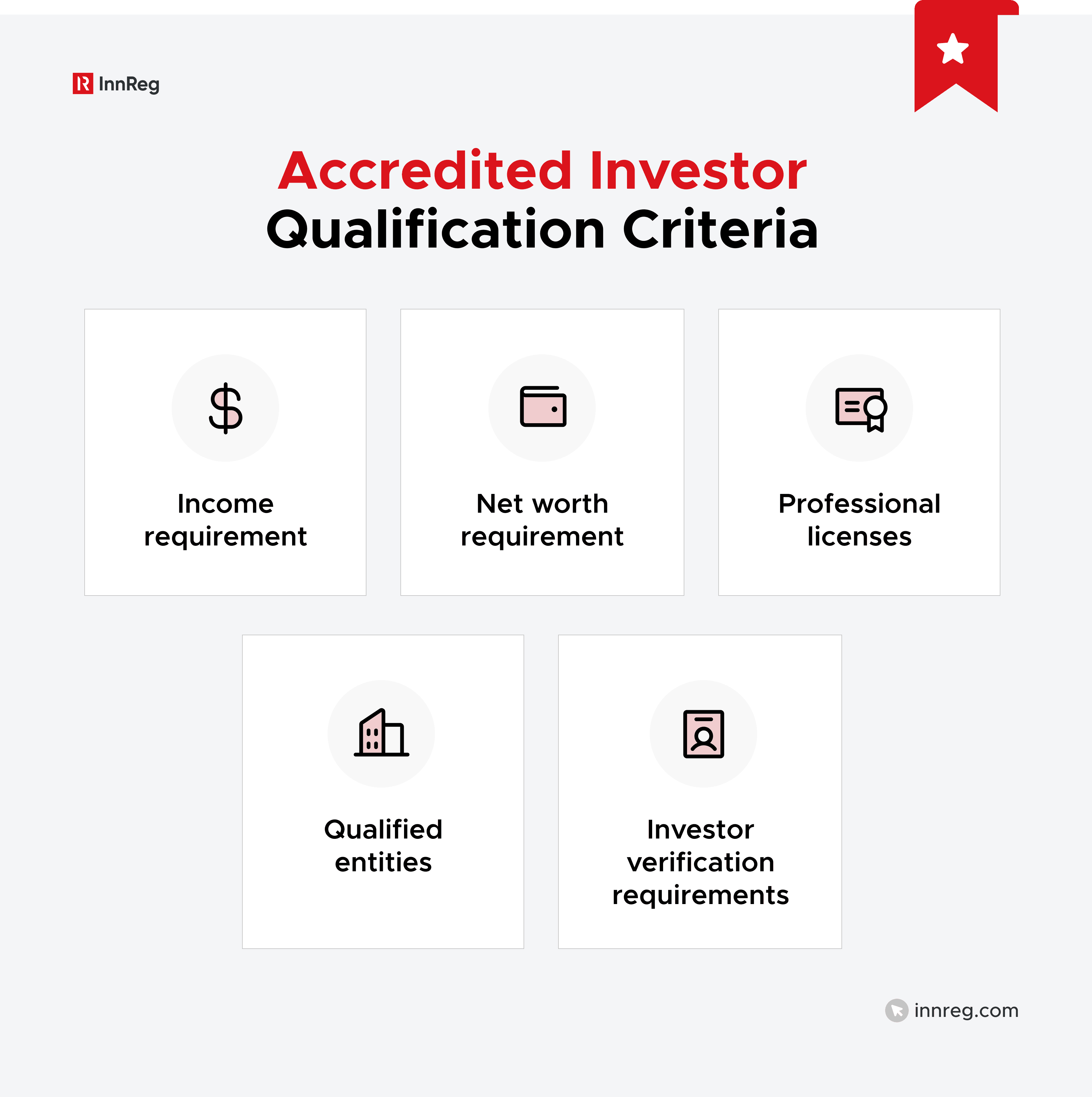
An individual may qualify as an accredited investor based on income, net worth, or certain professional credentials. For example, a person may qualify if they’ve earned more than $200,000 individually, or $300,000 jointly with a spouse or partner, during the previous two years and reasonably expect to reach the same income level in the current year.
A person may also qualify based on net worth if their individual or joint net worth exceeds $1 million, excluding the value of their primary residence. Certain entities, private funds, trusts, family offices, and institutional investors may also meet accredited investor standards depending on their assets and structure.
The SEC has also expanded the definition over time to include some professional qualifications. Individuals holding certain securities licenses, including Series 7, Series 65, and Series 82 licenses, may qualify as accredited investors even if they don’t meet the traditional income or net worth thresholds.

General Solicitation Rules Under Regulation D
General solicitation refers to publicly marketing or advertising a securities offering. Whether a company can publicly promote an offering depends on which Regulation D exemption it uses.
Under Rule 506(b), companies can’t use public advertising to attract investors. Fundraising activity is generally limited to private communications, existing relationships, and investor networks.
Rule 506(c) allows public solicitation, which means companies can market offerings through websites, social media, online platforms, events, podcasts, and other public channels. In exchange for that flexibility, all investors in the offering must qualify as accredited investors, and companies must verify that status.
Rule 504 may also allow public solicitation in certain situations, but state securities laws often affect what’s permitted. Because marketing rules can vary across exemptions, companies need to align their fundraising strategy with the correct Regulation D framework before communicating with investors publicly.
Learn more about general solicitation →
Disclosure Requirements and Offering Documents
Regulation D offerings often involve disclosure documents that explain the company, the investment opportunity, and potential risks. The amount and type of information shared with investors can vary depending on the exemption being used and the type of investors participating in the offering.
When Disclosure Is Required
Disclosure requirements under Regulation D depend largely on the type of investors participating in the offering. When non-accredited investors are included in a Rule 506(b) offering, companies are generally expected to provide more detailed information about the business and the investment.
That information often includes details about the company’s operations, financial condition, management team, use of proceeds, and potential risks. The goal is to give investors enough information to evaluate the offering before making an investment decision.
Offerings limited to accredited investors may involve fewer formal disclosure requirements. Even so, companies still need to communicate accurately and avoid misleading statements.
Private Placement Memorandum (PPM) Expectations
Many Regulation D offerings use a private placement memorandum, or PPM, to provide investors with information about the company and the offering. A PPM is designed to:
Explain the investment opportunity
Identify contingencies
Outline potential risks
Document key details related to the raise
PPMs often include information about the company’s business model, management team, financial condition, offering terms, investor rights, and planned use of funds. The level of detail can vary depending on the size of the offering, the investor base, and the type of business involved.
While a PPM isn’t always legally required, many companies still prepare one to support investor communications and reduce potential disputes later on. Well-prepared offering documents can also help companies present information more consistently throughout the fundraising process.
Anti-Fraud Considerations
All Regulation D offerings remain subject to federal anti-fraud rules, even when the offering is exempt from SEC registration. Companies can still face regulatory action if investor communications contain false statements, misleading claims, or material omissions.
Anti-fraud obligations apply to all offering materials and investor discussions, including pitch decks, websites, emails, presentations, and verbal communications. Companies should also pay close attention to statements about projected returns, business performance, partnerships, licensing status, or future growth expectations.
For fintech companies and emerging financial platforms, marketing language can become a particular area of focus. Overly aggressive fundraising statements or unclear descriptions of products and regulatory status can create compliance risks during a private offering.
Explore our fintech compliance glossary to mitigate communication risks →
Form D Filing Requirements
Companies relying on Regulation D are generally required to file Form D with the SEC after the first sale of securities. The filing helps notify regulators that the company is conducting an exempt private offering under Regulation D.
When and How to File Form D
Companies relying on Regulation D usually need to file Form D electronically with the SEC within 15 days after the first sale of securities. The filing is submitted through the SEC’s EDGAR system and provides basic information about the company and the offering.
Form D typically includes details such as the issuer’s name, offering size, exemption being used, executive officers, and the types of investors participating in the raise. Companies may also need to update the filing if certain information changes during the offering period.
Although Form D is generally considered a notice filing rather than an approval process, filing mistakes can still create problems. Late filings, incomplete information, or inconsistencies between offering documents and Form D disclosures can raise regulatory concerns.
See also:
Federal vs. State Notice Filings
Filing Form D with the SEC doesn’t automatically satisfy state filing requirements. Many states require separate notice filings and filing fees when securities are offered to investors within their jurisdiction.
These filings are commonly referred to as Blue Sky notice filings. The requirements can vary by state and may include copies of Form D, consent forms, filing fees, and additional disclosures.
Timing also matters. Some states require filings shortly after the first sale to an investor in that state, while others follow different deadlines. Companies raising capital across multiple states often need a coordinated process to track filings, deadlines, and investor locations throughout the offering.

Common Filing Errors
Form D and state notice filings may seem straightforward, but mistakes are fairly common during private offerings. Even small filing issues can create delays, administrative problems, or additional regulatory scrutiny later on.
One common issue is missing filing deadlines, especially when companies accept investors across multiple states. Errors can also happen when information in Form D filings doesn’t match offering documents, investor communications, or subscription agreements.
Companies sometimes overlook state notice filings entirely, particularly during fast-moving fundraising rounds. Keeping offering documents, investor records, and regulatory filings aligned throughout the raise can help reduce compliance gaps and operational confusion.
Blue Sky Laws and State Compliance
State securities laws, commonly called Blue Sky laws, still play an important role in many Regulation D offerings. Even when an offering qualifies for a federal registration exemption, companies may still face state filing, notice, and compliance obligations.
Learn more about Blue Sky Laws →
Federal Preemption Under Rule 506
Rule 506 offerings receive broad federal preemption under NSMIA. This means states generally can’t require companies to separately register Rule 506 offerings at the state level.
State Notice Filings and Fees
Even when federal preemption applies, companies still need to comply with state notice filing requirements. Most states require issuers to submit filings, pay fees, and provide copies of Form D when investors are located within the state.
The filing process can vary from one jurisdiction to another. Some states have different deadlines, fee structures, consent forms, or filing methods, which can make multi-state offerings more difficult to manage.
Risks of Overlooking State Requirements
State filing obligations are sometimes treated as a secondary issue during private offerings, especially when companies focus heavily on federal exemptions. Still, overlooking state requirements can create regulatory problems even when the offering itself qualifies under Regulation D.
Missed notice filings, unpaid fees, or incomplete submissions can lead to penalties, enforcement inquiries, or restrictions on future fundraising activity in certain states. These issues can become more complicated when companies accept investors across multiple jurisdictions without a centralized compliance process.
Integration Rules and Offering Structure
Companies sometimes conduct multiple fundraising activities close together, including private offerings, SAFE rounds, convertible notes, or other securities sales. When those offerings overlap or appear connected, regulators may evaluate whether they should be treated as a single offering under integration rules.
What “Integration” Means in Practice
Integration refers to situations where separate securities offerings may be treated as one combined offering by regulators. If multiple fundraising activities appear closely connected, the SEC may review them together instead of separately.
This matters because combining offerings can affect exemption eligibility, investor limitations, disclosure requirements, and solicitation rules. For example, a company conducting both a Rule 506(b) and Rule 506(c) offering around the same time may face additional scrutiny if the activities overlap too closely.
Regulators often look at factors such as timing, investor groups, offering terms, and the purpose of the raise when evaluating integration issues. Companies planning multiple fundraising rounds usually need a clear offering structure and organized documentation to reduce unnecessary compliance risk.
How Multiple Offerings Can Create Compliance Risk
Running multiple offerings close together can create compliance challenges if the structure and timing aren’t carefully managed. Issues often arise when investor groups, marketing activity, or offering terms overlap across different fundraising rounds.
For example, a company using Rule 506(b) can’t publicly advertise the offering. If that same company later launches a publicly marketed Rule 506(c) offering without a clear separation between the two raises, regulators may question whether the offerings should be treated as integrated.
Integration concerns can also appear when companies move quickly between SAFE rounds, convertible notes, equity raises, or crowdfunding campaigns. Without clear documentation and planning, separate fundraising activities can begin to look like parts of one larger offering from a regulatory perspective.
Safe Harbors and Timing Considerations
The SEC provides certain safe harbors that help companies separate one offering from another. These safe harbors are designed to reduce the risk that different fundraising activities will be treated as a single integrated offering.
Timing is often one of the most important factors. Companies may space offerings apart, limit overlapping investor outreach, or separate marketing activity to support a clearer distinction between fundraising rounds.
Despite safe harbors, companies still need to think carefully about how offerings are structured and communicated. Clear documentation, organized investor records, and consistent offering procedures can help reduce integration concerns during future regulatory reviews.
Common Compliance Challenges With Regulation D
Even when companies qualify for a Regulation D exemption, the fundraising process can still create operational and regulatory challenges. Common issues include:
Improper investor verification: Companies using Rule 506(c) must verify accredited investor status. Weak verification procedures or incomplete records can create compliance concerns later on.
Problems with marketing and solicitation: Public advertising rules vary depending on the exemption being used. Companies sometimes unintentionally cross the line between private outreach and general solicitation, especially when using social media, podcasts, webinars, or online fundraising platforms.
Incomplete or inconsistent disclosures: Investor materials, pitch decks, websites, and offering documents should align with each other. Conflicting statements or missing risk disclosures can create legal and regulatory exposure.
Missed Form D or state filing deadlines: Multi-state offerings often involve several filing obligations with different deadlines and fee requirements. Missing a filing can create avoidable compliance issues.
Poor documentation and recordkeeping: Companies should maintain organized records related to investor communications, subscription documents, verification procedures, and filings. Missing records can become a problem during audits, examinations, investor disputes, or future fundraising rounds.
Integration concerns across multiple offerings: Startups sometimes move quickly between SAFE rounds, convertible notes, equity raises, and crowdfunding campaigns. Without careful planning, separate offerings may appear connected from a regulatory standpoint.
Overly aggressive fundraising statements: Statements about projected returns, future growth, licensing expectations, or product capabilities can attract scrutiny if they’re misleading or unsupported. This is especially important for fintech companies offering innovative or highly regulated financial products.
Operational strain during rapid growth: As fundraising activity increases, compliance responsibilities often expand as well. Companies may need stronger internal processes, outside legal support, or outsourced compliance teams to manage filings, investor onboarding, communications, and ongoing regulatory obligations.
SEC Enforcement Trends and Recent Updates
Regulators continue to pay close attention to private offerings conducted under Regulation D, especially as online fundraising and fintech investment activity have expanded. SEC enforcement actions often focus on investor communications, offering disclosures, marketing practices, and exemption eligibility.
Focus Areas in Private Offerings
Regulators frequently review whether companies are properly qualified for an exemption and whether investors received accurate and complete information.
Common areas of scrutiny include:
Misleading statements in pitch materials
Improper use of general solicitation
Weak accredited investor verification procedures
Missing Form D or state notice filings
The SEC also pays close attention to offerings involving complex financial products, digital assets, and emerging fintech business models.
Companies raising capital online may face additional attention because investor communications can spread quickly across websites, social media, podcasts, webinars, and digital investment platforms. As fundraising channels evolve, regulators continue expanding their focus beyond traditional offering documents and into broader marketing activity.
Marketing and Solicitation Scrutiny
The SEC closely reviews how companies advertise offerings and communicate with potential investors across public channels.
Social media posts, podcasts, webinars, online investor platforms, and promotional videos can all become part of a regulatory review. Statements about projected growth, expected returns, partnerships, licensing status, or product capabilities may also attract scrutiny if they appear misleading or unsupported.
Companies, therefore, need to be careful about blending educational content with fundraising activity. What starts as brand marketing or product promotion can sometimes be viewed as securities solicitation depending on how the communication is presented.
Enforcement Actions Tied to Reg D Misuse
SEC enforcement actions tied to Regulation D often involve companies that failed to follow exemption requirements or provided misleading information during fundraising activity. Even when companies intend to rely on a valid exemption, poor execution can still create regulatory exposure.
Common enforcement issues include:
Improper accredited investor verification
Unregistered public offerings disguised as private placements
Inaccurate disclosures
Misleading investor communications
Some cases also involve misuse of offering proceeds, incomplete filings, or failure to follow solicitation restrictions tied to a specific exemption.
Fintech and digital asset companies can face additional scrutiny when fundraising activity involves innovative financial products or rapidly evolving business models. Regulators often focus on whether companies accurately described their products, licensing status, compliance framework, and operational capabilities during the offering process.

Regulation D vs. Other Securities Exemptions
Regulation D isn’t the only exemption available for private fundraising. Depending on the company’s goals, investor base, and fundraising strategy, other exemptions may offer different advantages, limitations, and compliance requirements.
See also:
Regulation D vs. Regulation A
Regulation D and Regulation A both allow companies to raise capital without completing a traditional public offering, but the two exemptions work very differently. Regulation D is generally used for private fundraising, while Regulation A is designed for broader public capital raising.
Regulation D offerings are usually limited to private investors and often involve fewer upfront disclosure and reporting requirements. Rule 506(b) and Rule 506(c) offerings are especially common among startups, private funds, and fintech companies looking to raise capital from accredited investors.
Regulation A allows companies to publicly market securities offerings and accept investments from the general public, including non-accredited investors. At the same time, Regulation A offerings typically involve more SEC review, offering disclosures, financial reporting obligations, and higher preparation costs.
Because of these differences, companies often choose Regulation D when they want a faster and more private fundraising process. Regulation A may be more suitable for companies looking to raise capital from a wider investor audience through a more public-facing offering structure.
The table below highlights some of the main differences between Regulation D and Regulation A offerings.
Aspect | Regulation D | Regulation A |
|---|---|---|
Offering Type | Private offering | Public-facing exempt offering |
Investor Access | Mostly private investors | Open to the general public |
Accredited Investors Required | Often yes | No |
Public Advertising | Limited under some exemptions | Allowed |
SEC Review Process | Limited | More extensive |
Ongoing Reporting | Usually limited | Greater reporting obligations |
Common Users | Startups, private funds, fintechs | Growth-stage companies seeking broader investor access |
Fundraising Speed | Often faster | Usually, a longer preparation timeline |
Regulation D vs. Regulation Crowdfunding
Regulation D and Regulation Crowdfunding both provide alternatives to traditional public offerings, but they’re designed for different fundraising goals. Regulation D is commonly used for larger private raises, while Regulation Crowdfunding focuses on smaller online fundraising campaigns open to a broader investor base.
Regulation Crowdfunding allows companies to raise money through SEC-registered crowdfunding platforms and accept investments from both accredited and non-accredited investors. The exemption also comes with fundraising caps, investor limits, platform requirements, and disclosure obligations.
By comparison, Regulation D offerings often provide more flexibility for larger raises and institutional investor participation. Many startups and fintech companies use Regulation D when working with angel investors, venture capital firms, family offices, or private funds.
The investor experience also differs significantly between the two exemptions. Regulation Crowdfunding is generally platform-driven and publicly accessible, while Regulation D offerings are often more privately structured and relationship-based.
The table below highlights some of the key differences between Regulation D and Regulation Crowdfunding.
Aspect | Regulation D | Regulation Crowdfunding |
|---|---|---|
Offering Type | Private offering | Online crowdfunding offering |
Investor Access | Primarily private investors | Open to the public |
Non-Accredited Investors | Limited under some exemptions | Allowed |
Public Marketing | Depends on exemption | Allowed through crowdfunding platforms |
Fundraising Limits | Certain exemptions have no limit | Subject to annual fundraising caps |
Platform Requirement | Not required | Must use a registered crowdfunding platform |
Typical Raise Size | Larger private raises | Smaller fundraising campaigns |
Common Users | Startups, private funds, fintechs | Early-stage startups and consumer-facing businesses |
Learn more about Regulation Crowdfunding →
Matching the Exemption to Your Raise
The right exemption usually depends on the company’s fundraising goals, investor base, timeline, and operational resources. Each framework offers different tradeoffs related to investor access, marketing flexibility, compliance obligations, and fundraising scale.
Companies often evaluate the following factors when deciding between Regulation D, Regulation A, and Regulation Crowdfunding:
Investor audience: Regulation D is commonly used for accredited investors, venture capital firms, family offices, and institutional investors. Regulation A and Regulation Crowdfunding can support broader retail investor participation.
Fundraising size: Regulation D is often better suited for larger private raises, while Regulation Crowdfunding is commonly used for smaller online fundraising campaigns.
Public marketing needs: Some companies want to publicly advertise their offering through social media, events, podcasts, or online platforms. Others prefer a more private fundraising process built around existing investor relationships.
Disclosure and reporting obligations: Regulation A generally involves more SEC review and ongoing reporting responsibilities than Regulation D offerings.
Operational complexity: Different exemptions come with different filing, investor onboarding, verification, and compliance requirements. Companies need to evaluate how much internal infrastructure they can realistically support during the raise.
Long-term business strategy: The choice may also depend on future growth plans, investor expectations, or whether the company plans to pursue larger fundraising rounds or public market activity later on.
Because these exemptions operate differently, companies often work closely with legal and compliance teams before choosing a fundraising path. The offering structure, investor strategy, and communication plan all need to align with the exemption being used.
Step-By-Step Guide: How to Raise Capital Under Regulation D
Raising capital under Regulation D involves more than selecting an exemption and accepting investments. Companies typically need a structured process that covers offering strategy, investor qualification, disclosures, filings, and ongoing compliance responsibilities.
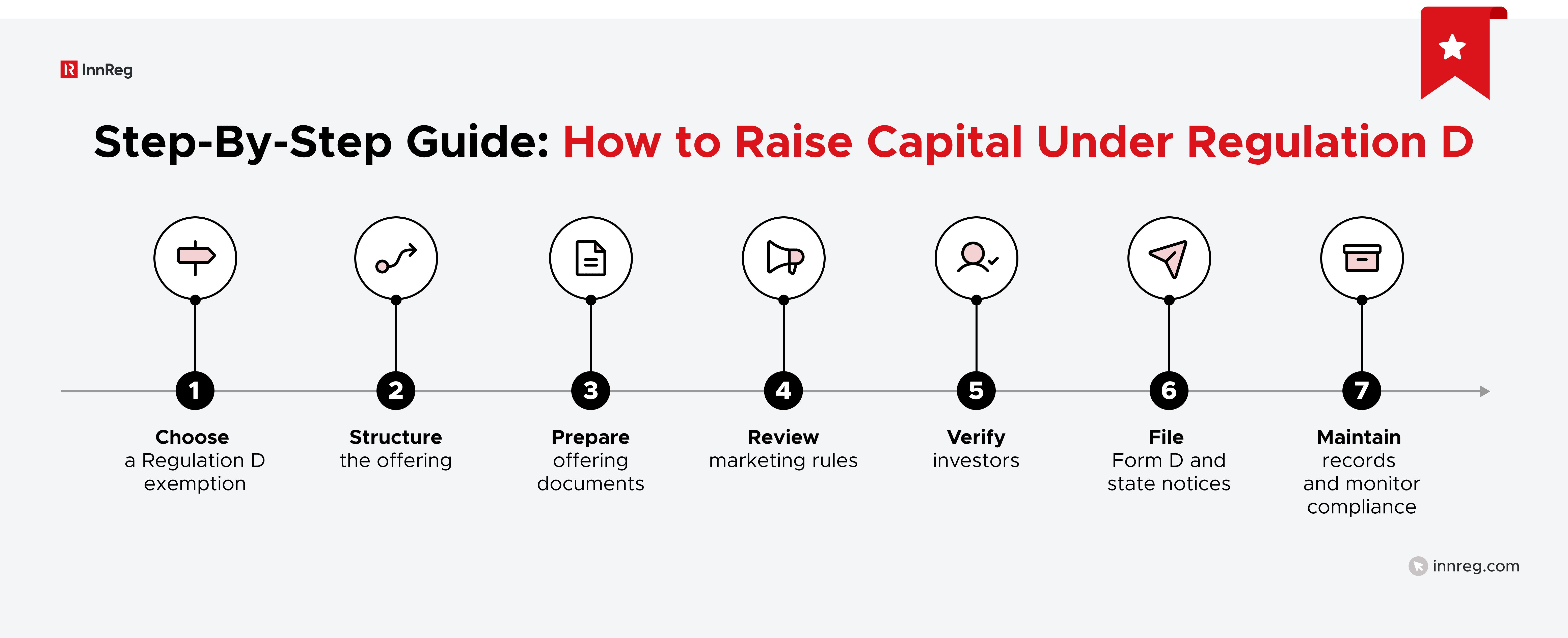
Step 1: Choose the right Regulation D exemption
Companies typically begin by deciding whether Rule 504, Rule 506(b), or Rule 506(c) best fits the offering structure, investor strategy, and fundraising goals.
Step 2: Structure the offering
This includes determining the type of securities being offered, the target raise amount, investor eligibility requirements, and investment terms.
Step 3: Prepare offering documents
Companies often create subscription agreements, investor questionnaires, and private placement memorandums (PPMs) to support disclosures and investor communications.
Step 4: Review marketing and solicitation plans
The company’s outreach strategy should align with the exemption being used, especially if public advertising, online promotion, or social media marketing will be involved.
Step 5: Verify investor eligibility
Depending on the exemption, companies may need to confirm accredited investor status or evaluate whether non-accredited investors meet sophistication standards.
Step 6: File Form D and complete state notice filings
After the first sale of securities, companies generally need to submit Form D with the SEC and complete any required state notice filings and fee payments.
Step 7: Maintain records and compliance documentation
Investor communications, verification records, subscription documents, and regulatory filings should remain organized throughout the offering process.
Step 8: Monitor ongoing compliance responsibilities
Fundraising activity can continue creating compliance obligations after the offering begins, especially when new investors are added or offering terms change over time.
For fintech companies and other regulated businesses, fundraising often overlaps with licensing, marketing reviews, AML obligations, investor onboarding, and operational compliance processes. Because of this, many companies build compliance procedures into the fundraising process early instead of addressing them later in the offering cycle.

—
Regulation D gives companies a widely used path for raising private capital without completing a full SEC registration process. This exemption is commonly used by startups, fintech companies, private funds, and other businesses raising money from private investors.
Choosing the right exemption depends on factors such as investor type, fundraising strategy, marketing plans, and compliance obligations. Different rules apply to Rule 504, Rule 506(b), and Rule 506(c), especially around solicitation, disclosures, and investor eligibility.
Even though Regulation D offerings are exempt from registration, companies still need to manage filings, investor communications, and state compliance requirements carefully. A well-structured offering process can help reduce unnecessary regulatory and operational risk during fundraising activity.

Tarik is a Principal Compliance Consultant at InnReg with over 5 years of experience advising fintech clients across broker-dealer, RIA, and money transmitter verticals. He holds FINRA Series 3, 7, 24, 57, 63, 79, and 99 licenses, with expertise in regulatory strategy, supervisory systems, and compliance roadmap implementation.
How Can InnReg Help?
InnReg is a global regulatory compliance and operations consulting team serving financial services companies since 2013.
We are especially effective at launching and scaling fintechs with innovative compliance strategies and delivering cost-effective managed services, assisted by proprietary regtech solutions.
If you need help with broker-dealer compliance, reach out to our regulatory experts today:
Related Articles



Featured LinkedIn Posts